
🔑 Key Takeaways
- Google Pay vs PhonePe vs Paytm safety India shows PhonePe leading with 47% market share and robust security features
- All three apps use encryption, biometric authentication, and fraud detection systems for user protection
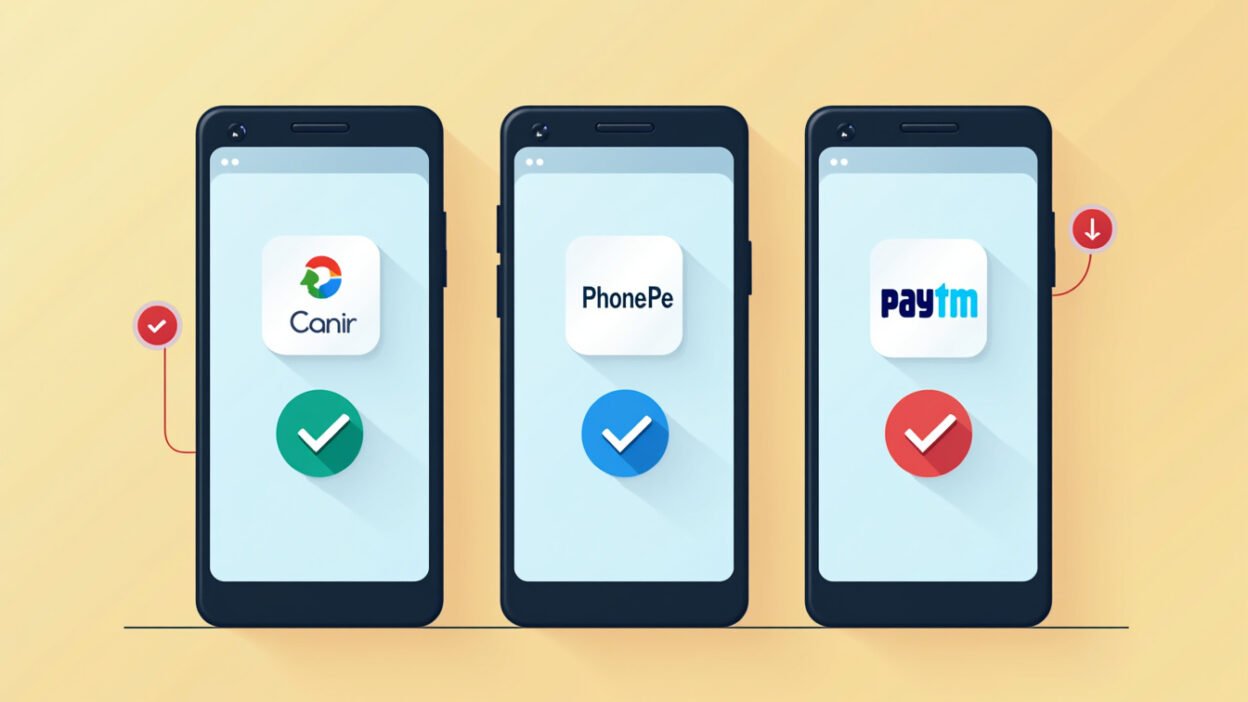
- Google Pay offers simplicity with device-level authentication; PhonePe provides real-time alerts; Paytm includes AI-based fraud monitoring
- PhonePe and Google Pay dominate 83% of UPI transactions, creating concentration risk in India’s payment ecosystem
- Choose based on your priorities: PhonePe for reliability, Google Pay for simplicity, or Paytm for versatility
Google Pay vs PhonePe vs Paytm: Which Payment App Is Safest in India?

I’m going to be direct with you: Google Pay vs PhonePe vs Paytm safety India isn’t about picking a winner, it’s about understanding what each app does differently. India’s digital payments ecosystem has evolved rapidly, and all three apps now focus heavily on advanced security features like encryption, biometric authentication, and fraud detection systems.
The question isn’t whether these apps are safe—they are. The real question is which one matches your needs and how they compare head-to-head.
Why Security Matters in Digital Payments
300 million Indians rely on UPI apps every month, and that number keeps growing. With rising cyber threats, payment apps have stepped up their game significantly. What separates the best from the rest isn’t just one security layer—it’s multiple layers working together.
Each app has invested in different security approaches, and understanding these differences helps you choose confidently.
Google Pay vs PhonePe vs Paytm: Security Features Breakdown
Let me break down what each app actually offers in terms of protection:
| Feature | Google Pay | PhonePe | Paytm |
|---|---|---|---|
| Device-Level Authentication | Yes | Yes | Yes |
| UPI PIN Verification | Yes | Yes | Yes |
| Real-Time Transaction Alerts | Yes | Yes | Yes |
| App Lock Feature | Yes | Yes | Yes |
| AI-Based Fraud Monitoring | Integrated | Integrated | Advanced |
| OTP Verification | Yes | Yes | Yes |
| Market Share (2026) | 36% | 47% | 7% |
Google Pay: Trusted for Simplicity and Security
Google Pay remains one of the most trusted UPI apps in India, and I’ll tell you why. It offers multiple layers of security including device-level authentication and UPI PIN verification. The clean interface means you’re not distracted by unnecessary features—you just pay.
Its strong fraud protection mechanisms and integration with Google’s security infrastructure make it reliable for everyday transactions. Google Pay dominates with 36% market share, and that trust isn’t accidental.
What I appreciate about Google Pay is the simplicity. There’s no hidden complexity, no surprise fees on standard UPI transfers. You know exactly what you’re getting.
PhonePe: Strong Security with Wide Acceptance
PhonePe processes over 8 billion transactions monthly and captures 47% of India’s digital payments market. That scale matters because it means constant security testing and refinement.
The app is known for its robust security framework with features like app lock, real-time transaction alerts, and secure UPI processing. Its massive merchant network means you’ll actually use it, which matters for security—familiarity reduces mistakes.
PhonePe dominates with wide acceptance, and that’s partly because their security infrastructure can handle the volume. Both PhonePe and Google Pay charge zero fees for standard UPI transfers, so cost isn’t a differentiator.
Paytm: Advanced Protection with Versatility
Paytm offers a comprehensive digital payments ecosystem with strong security features including PIN protection, OTP verification, and AI-based fraud monitoring. The app supports UPI, wallets, bill payments, and financial services.
Here’s what happened though: Paytm’s market share dropped to 7% after their payment bank faced regulatory restrictions in early 2024. This is important because it shows how regulatory compliance directly impacts security and user trust.
The app is still secure, but the market has shifted. If you want versatility beyond just UPI, Paytm offers more options. Just be aware of the platform fees that range from ₹1 to ₹40 plus quarterly wallet charges.
The Concentration Risk Nobody Talks About
Here’s something I need to tell you straight: PhonePe and Google Pay account for more than 80% of all UPI transactions. An Indian parliamentary panel has flagged this as a systemic risk for India’s financial stability.
This matters for your security because concentration creates vulnerability. When two apps dominate, any breach or outage affects the majority of India’s digital payments. Your individual transaction might be safe, but the ecosystem itself faces risks.
Aggressive discounting and zero MDR create barriers for smaller players, hindering innovation. This means you have fewer alternatives if something goes wrong.
What About BHIM? The Government-Backed Option
I should mention BHIM, developed by the National Payments Corporation of India. It’s known for simplicity and high security standards because it’s government-backed and follows strict regulatory protocols.
BHIM ensures safe and reliable transactions for users who prefer a no-frills UPI experience. If you want the most regulated option possible, this is it. However, it lacks the merchant network and user experience polish of the bigger three.
Real Talk: Which One Is Actually Safest?
I’m not going to tell you there’s one clear winner because the answer depends on what you prioritize. All three apps use encryption, biometric authentication, and fraud detection. All three are genuinely secure.
PhonePe excels in reliability and merchant acceptance. Google Pay dominates in simplicity and integration. Paytm offers versatility across multiple financial services. From a pure security standpoint, they’re comparable—each uses industry-standard protections.
The real safety difference comes from user behaviour, not app features. The app you’ll actually use correctly is the safest one for you.
Security Features That Make These Apps Reliable
- Encryption: All three apps encrypt your data in transit and at rest
- Biometric authentication: Fingerprint or face recognition adds a layer beyond passwords
- Real-time monitoring: Fraud detection systems flag suspicious activity instantly
- Device-level security: Your phone’s security features integrate with the app
- Transaction verification: Multiple confirmation steps before money moves
- Regulatory compliance: All operate under RBI oversight and NPCI guidelines
How to Stay Safe Regardless of Which App You Choose
The app you pick matters less than how you use it. I recommend these practices regardless of whether you choose Google Pay, PhonePe, or Paytm:
- Enable biometric authentication on your device and app
- Never share your UPI PIN, OTP, or CVV with anyone
- Review transaction alerts immediately and report anything unusual
- Keep your phone’s operating system updated
- Use strong device passwords or biometric locks
- Avoid public Wi-Fi when making payments
- Check merchant details before confirming payment
The Market Reality: What the Numbers Tell Us
PhonePe processes over 8 billion transactions monthly. Google Pay follows with significant volume. Paytm sits at 7% after regulatory challenges. These numbers reflect user confidence, but they also show concentration risk.
From a security perspective, scale matters. Larger apps invest more in security infrastructure. Smaller apps sometimes offer more personalized support. Neither approach is inherently safer—they’re just different.
Making Your Choice: Google Pay vs PhonePe vs Paytm Safety India
I’ll be honest: you can’t go wrong with any of these apps from a security standpoint. All three implement modern security standards, regulatory compliance, and fraud protection.
Choose PhonePe if you want the most widely accepted app with highest transaction volume. Choose Google Pay if you value simplicity and integration with Google’s ecosystem. Choose Paytm if you need versatility beyond UPI payments.
The key is picking one and using it consistently. Familiarity breeds security—you’ll notice when something feels wrong with an app you use daily.
Final Thoughts on Payment App Safety in 2026
India’s digital payments ecosystem has evolved rapidly, and security is genuinely strong across all major platforms. The question of which payment app is safest depends less on technology and more on your personal use case and preferences.
When evaluating Google Pay vs PhonePe vs Paytm safety India, remember that all three offer multiple layers of protection, regulatory oversight, and fraud detection. Your choice should be based on acceptance, user experience, and which features matter most to you—because you’ll only stay safe if you actually use the app you choose.
Conclusion: Your Safety Depends on the Right Choice for You
I’ve walked you through the security features, market positions, and practical differences between these three apps. The truth is straightforward: Google Pay, PhonePe, and Paytm are all safe, and your choice should reflect your priorities rather than security concerns alone.
PhonePe dominates with 47% market share and proven reliability. Google Pay excels in simplicity and integration. Paytm offers versatility across financial services. All use encryption, biometric authentication, and fraud monitoring.
The real question isn’t which app is safest—it’s which one you’ll use consistently and correctly. Because when evaluating Google Pay vs PhonePe vs Paytm safety India, the safest app is the one you understand and trust enough to use every day.
Frequently Asked Questions
Are Google Pay, PhonePe, and Paytm equally safe?
Yes, all three apps implement modern security standards including encryption, biometric authentication, and fraud detection. The security differences are minimal—your choice should be based on user experience, merchant acceptance, and which features matter to you rather than safety concerns.
Which app has the best fraud protection?
All three use AI-based fraud monitoring and real-time transaction alerts. Paytm emphasises advanced AI-based fraud monitoring, while PhonePe and Google Pay integrate fraud detection through their parent companies’ security infrastructure. The differences are subtle and all are effective.
Is BHIM safer than Google Pay, PhonePe, and Paytm?
BHIM is government-backed and follows strict regulatory protocols, making it highly secure. However, it’s not necessarily safer than the other three—it’s just a different approach. BHIM lacks the merchant network and polish of larger apps, which can actually impact real-world usability.
What should I do if I’m worried about the PhonePe and Google Pay duopoly?
The concentration of 80%+ market share in two apps does create systemic risk. If you’re concerned, consider using BHIM or supporting smaller players. However, from an individual user security perspective, this concentration doesn’t directly make your transactions less safe.
Should I use multiple payment apps for security?
You don’t need multiple apps for security—one well-managed app is sufficient and actually safer because familiarity reduces mistakes. However, having a backup app for merchant acceptance makes practical sense, even if it doesn’t improve security.
How often do these apps update their security features?
All three apps update regularly to address threats and comply with regulations. PhonePe and Google Pay, given their scale, likely update more frequently. Most security updates happen automatically on your phone without requiring manual action.